

Dr. Jayaruwan Bandara
MBBS · MSc · PGDCC · 28 March 2025
Carbon peeling and laser pigmentation removal are often grouped together in patient conversations, and for good reason: both use lasers, both improve skin appearance, and both are available at Janus. But they work on different principles, target different concerns, and behave differently on different skin tones.
Sri Lankan skin sits predominantly in the Fitzpatrick IV–V range, a medium-dark to dark skin tone that requires specific considerations when laser energy is involved. Getting this right is the difference between excellent results and post-inflammatory hyperpigmentation (which is the opposite of what you came in to treat).
Carbon peeling: what it does
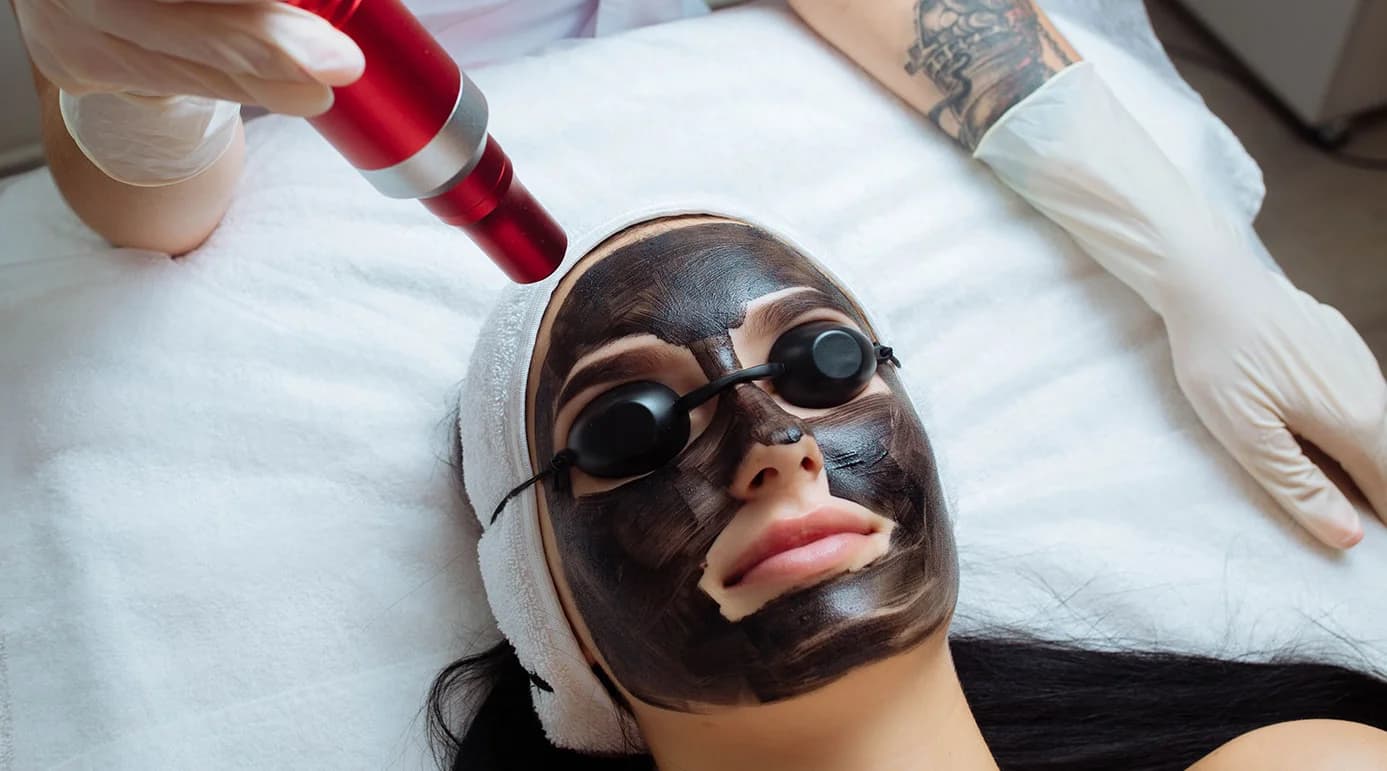
Carbon peeling (also called the "Hollywood peel" or "carbon laser peel") works like this:
- A thin layer of medical-grade carbon paste is applied evenly across the face
- The carbon is left to absorb into pores for 15–20 minutes
- A Nd:YAG laser at 1064nm is passed over the skin in two phases: first to heat and shrink pores, then to vaporise the carbon, taking dead skin cells, excess oil, and superficial impurities with it
- The heating effect stimulates collagen production
What it treats effectively: Enlarged pores, oily skin, dull complexion, superficial acne, uneven texture
What it doesn't treat: Deep pigmentation, melasma, dermal-level pigment deposits, tattoo pigmentation
Skin tone safety: The 1064nm wavelength has a low affinity for melanin, making it much safer for darker skin tones than most other laser wavelengths. Carbon peeling is generally well tolerated by Fitzpatrick IV–V skin.
Laser pigmentation removal: what it does
Laser pigmentation removal uses higher-energy pulses targeting melanin, the pigment responsible for hyperpigmentation, sun spots, and melasma. Multiple wavelengths may be used depending on the depth and type of pigmentation.
What it treats effectively: Sun spots, age spots, post-acne marks (PIH), tattoo pigmentation removal, superficial to medium-depth melasma
What it doesn't treat: The root cause of melasma (hormonal); pigmentation that is primarily in the dermis may require multiple sessions and is harder to clear
Skin tone safety: This is where expertise matters most. Lasers targeting melanin don't distinguish between the melanin in your pigmentation and the melanin in your skin tone. On dark skin, using the wrong wavelength, fluence, or pulse duration can cause post-inflammatory hyperpigmentation, making things worse. I use test patches and conservative settings for all pigmentation treatment on Fitzpatrick IV–V skin.
Which is right for you?
Choose carbon peeling if:
- Your primary concern is pore size, oily skin, or dull complexion
- You have surface-level skin texture issues
- You want a regular maintenance treatment (monthly)
- You're preparing your skin for a specific event
Choose laser pigmentation treatment if:
- You have visible sun spots, age spots, or post-acne marks
- You're treating melasma (multiple sessions required; hormonal melasma has a higher recurrence rate)
- You have artificial pigmentation (tattooed eyebrows, lips) you want reduced or removed
Consider combining both if:
- You have both textural concerns and visible pigmentation
- Dr. Bandara may sequence the treatments appropriately: carbon peeling first to improve skin quality, then pigmentation targeting
The most important variable
The most important variable in any laser treatment on dark skin is not the machine; it's the experience of the practitioner. The correct wavelength selection, fluence calibration, and patch testing protocol are what prevent complications.
At Janus, I assess every patient's Fitzpatrick skin type before any laser treatment. I use test patches before full-face treatment on new patients. I have protocols for the skin types I see every day, because Sri Lankan skin requires a different approach than the fair-skin settings that most laser protocols are designed around.
Book a skin assessment to discuss which laser treatment is appropriate for your skin tone and concerns.
Dr. Jayaruwan Bandara
MBBS (University of Ruhuna) · MSc Medical Administration · PGDCC
Medical Cosmetologist and founder of Janus Estheti Clinique, Rajagiriya, Colombo. Practicing since 2016.